
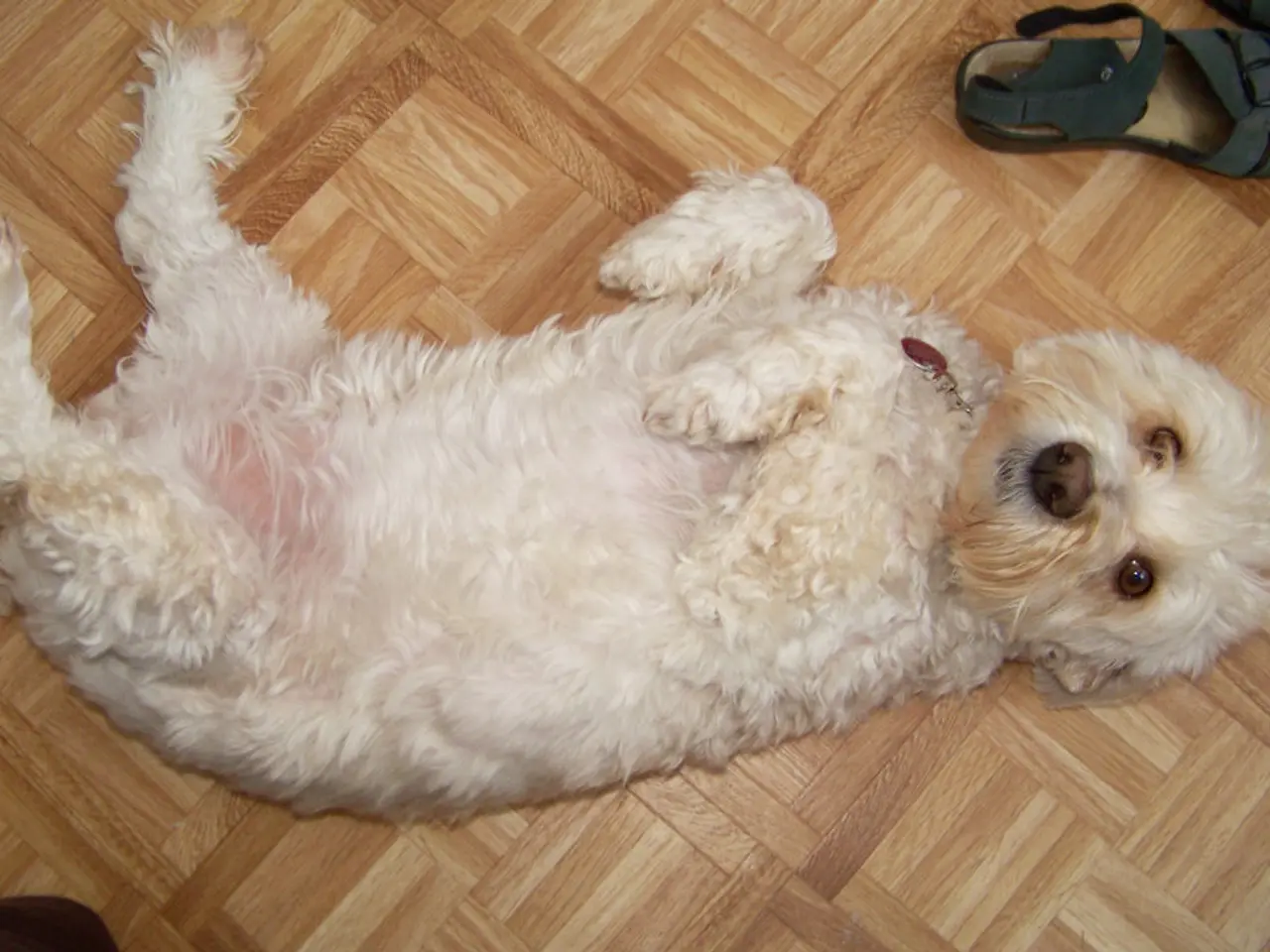
Four easy steps to train your dog to obey commands and heel smoothly
For dog owners seeking to enhance their walking experience, teaching their furry friends to stand in a heel position can be a game-changer. This position not only reduces the risk of tripping during walks but also aids in managing distractions and loose leash walking mistakes.
Following expert guidance, we've outlined a simple, treat-based method to train your dog to stand in the heel position.
**Step 1: Lure Your Dog into Position** Begin by holding a treat in your left hand close to your side. Use the treat as a lure to guide your dog to stand or sit beside your left leg, in the heel position.
**Step 2: Mark and Reward** As your dog moves into the correct heel position, mark the behaviour with a "yes" or a click from a clicker, then immediately reward your dog with the treat.
**Step 3: Repeat with Fading Lure** Repeat this process a few times with the treat visible. Then try again with your right hand empty, showing your dog that the lure isn't always there. Gradually, your dog should follow the empty hand.
**Step 4: Introduce Hand Signal** Once your dog follows the empty hand, change your lure hand into a hand signal—pointing behind you. This signal prompts the dog to move into heel position behind your left leg.
**Step 5: Add Verbal Cue** After a few repetitions with the hand signal, add your verbal cue—for example, "heel"—before pointing. Eventually, say the cue alone, and your dog should move into heel position reliably.
**Step 6: Practice Moving** Once your dog follows your hand signal and verbal cue stationary, start walking slowly while rewarding your dog for staying in position.
**Top Tips for Success**
- Give treats immediately after the dog is in position to strengthen the association. Use small, soft, high-value treats for quick consumption and to maintain your dog’s focus. - Deliver the treat by your side to reinforce the exact position you want. - Gradually reduce dependence on treats by rewarding intermittently once the dog reliably heels. - Maintain calm, focused energy during training to keep your dog attentive.
Some dog owners may prefer their dog to be able to stand in a heel position when required. If your dog has a hard time finding the heel position, using a mat as a target for their paws can help. Turning your dog toward you in a raindrop shape can also help move them into a heel position next to you.
For more advice on managing loose leash walking mistakes, check out this link: [link to article on managing loose leash walking mistakes]. For further guidance on teaching your dog to heel, visit this link: [link to article on teaching your dog to heel].
Juliana DeWillems, owner and head trainer at JW Dog Training & Behavior, recommends teaching the heel behavior with treats and turning the treat lure into a functional hand signal. Pupford Beef Liver Training Freeze-Dried Dog Treats have been found suitable for training and are a new favourite treat for some testers.
JW Dog Training & Behavior Consulting recently shared an Instagram post with advice on getting a dog to stand in a heel position, accompanied by a photo. For more insights from Juliana DeWillems, follow JW Dog Training & Behavior Consulting on Instagram.
- Some cat owners might also benefit from training their pets to exhibit behavior that promotes a peaceful home-and-garden environment.
- When using training treats, choosing high-value options can help maintain a dog's focus and encourage quick learning, much like Pupford Beef Liver Training Freeze-Dried Dog Treats.
- In addition to teaching dogs to stand in a heel position, similar techniques can be applied to train cats to stay in designated areas at home, reducing unwanted behaviors.
- By following the steps outlined and adopting a consistent training lifestyle, pet owners can enjoy a better relationship with their furry companions, whether they own dogs or cats.
- As pet owners explore various training methods, they might find it beneficial to seek advice from professionals like Juliana DeWillems, who has successfully implemented treat-based training techniques for various pets.